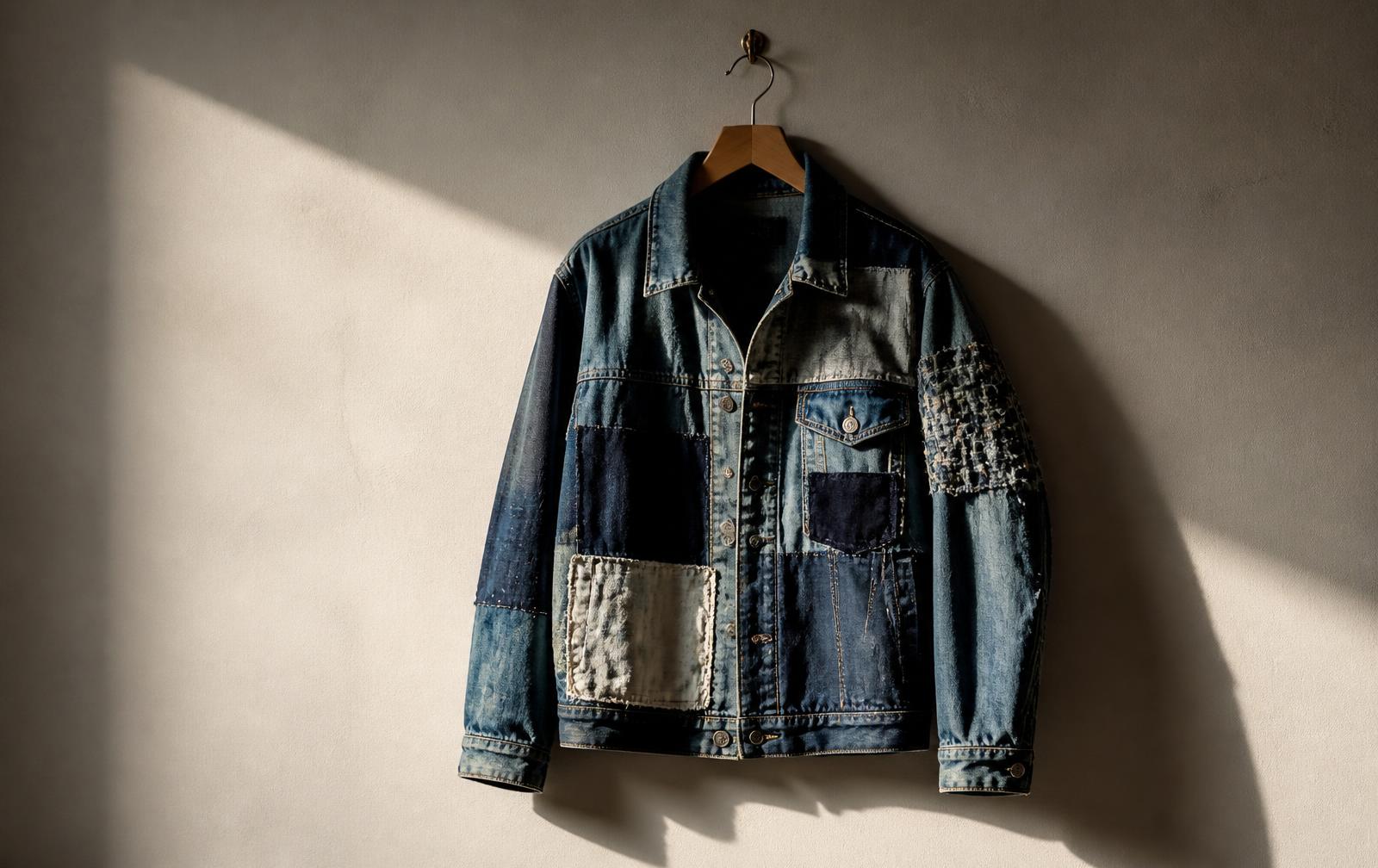
Why We Only Ever Make One
No print runs, no restocks, no size curve pushed out to a factory. The case for one-of-one, and what it costs us to work this way.
The fashion industry produces somewhere north of 100 billion garments a year and a huge share of them are never worn. The maths only works if clothes are cheap, identical and disposable. We decided early that we would rather make one good thing than a hundred forgettable ones.
One garment, one pattern, one life
Every piece starts as something that already exists — a 90s Carhartt jacket, a 70s trucker, a silk saree with a torn end panel. That garment dictates the rework. Its wear, its fade, its dimensions. We cannot reproduce it because the raw material was never reproducible in the first place.
"If a piece sells and someone asks for another, the honest answer is: there isn't one. That is the point."
What zero-waste actually looks like
Offcuts do not go in the bin. Denim scraps become patch panels and pocket linings. Saree borders become cushion trims and hair wraps. Thread ends and tiny remnants go into our embroidery hoops. On a good month we send almost nothing to landfill from the studio floor.
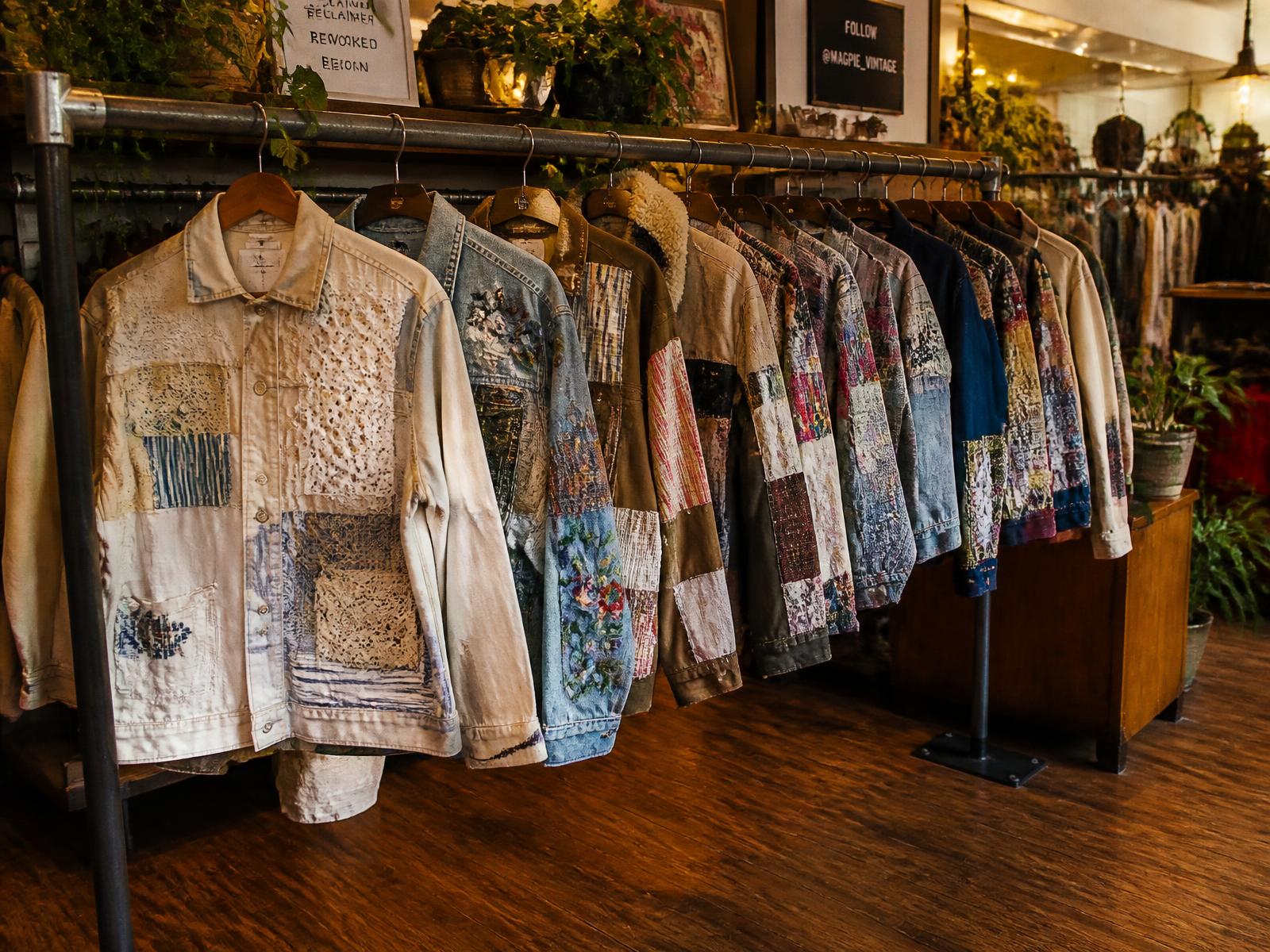
It is slower and it is more expensive per piece. It also means the jacket you buy will not be on three other people at the same party — and if it tears in two years, we would rather repair it than sell you another one.
More articles
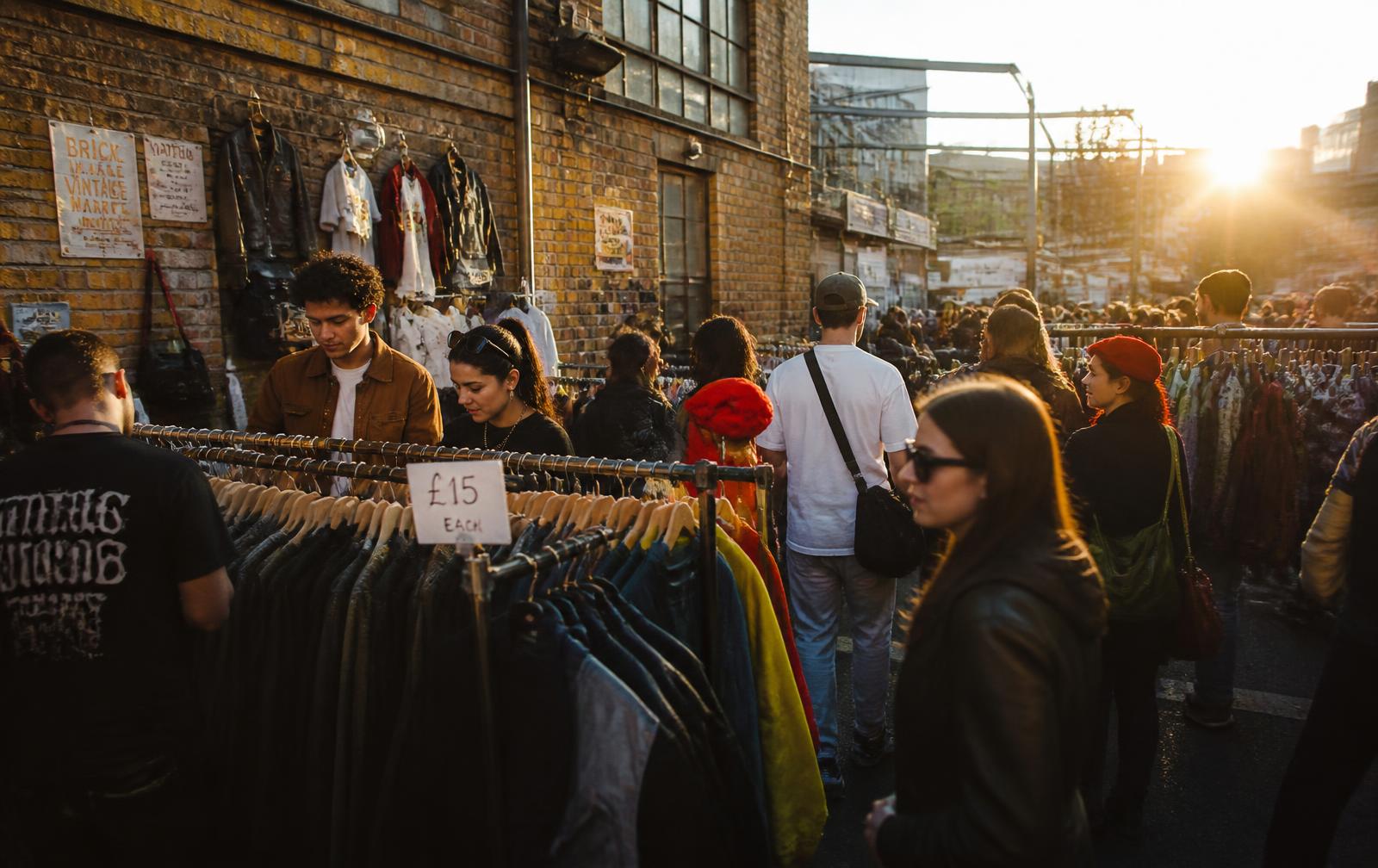
From a Brick Lane Market Stall to Two Studios
One sewing machine, a rack of dead-stock denim and a pitch on Brick Lane. Seven years on, here is how Karma Studio actually got built.
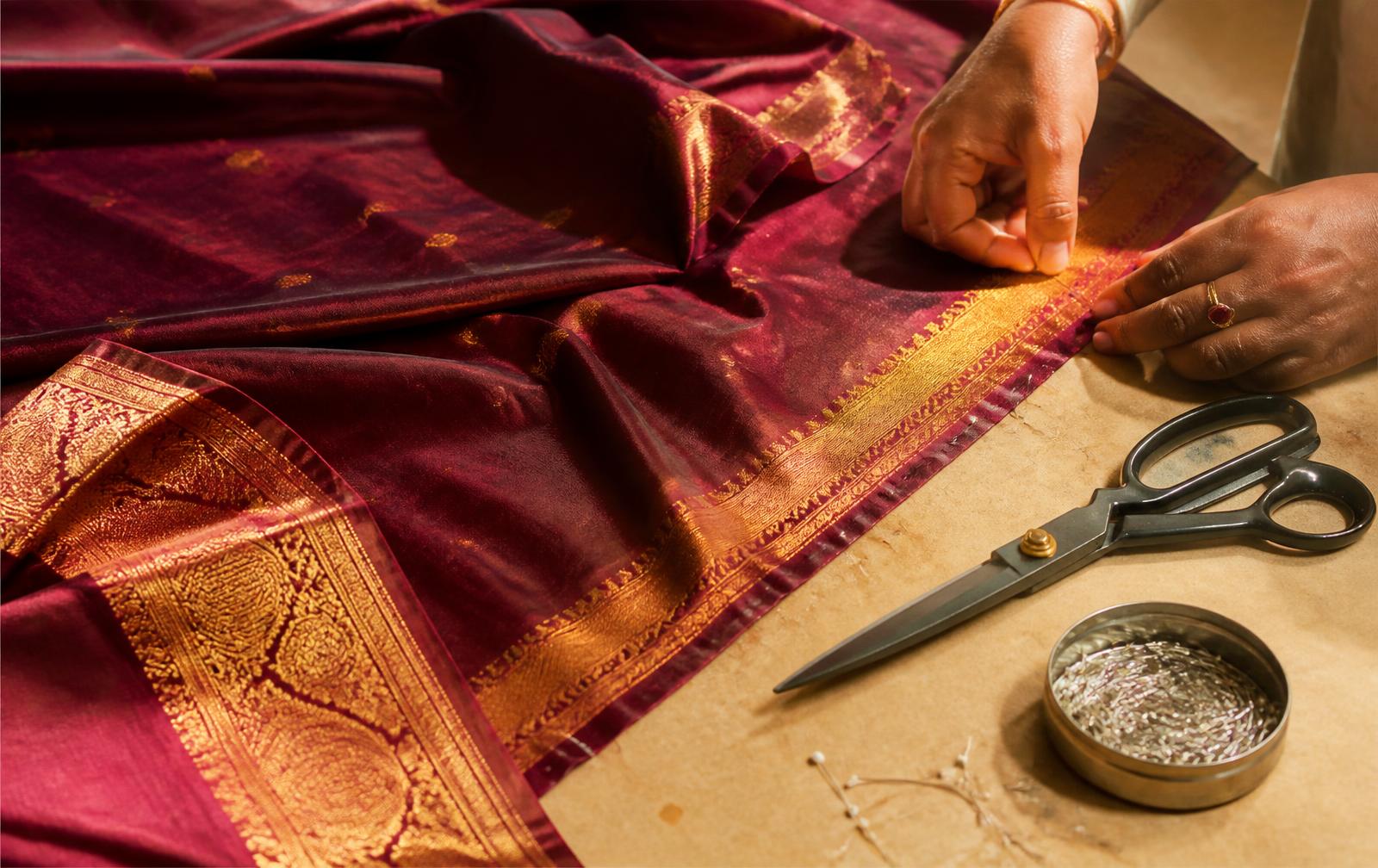
The Second Life of a Saree
How six metres of vintage silk from a market in India becomes a wrap skirt, a cropped top and a cushion — with nothing left over.